Mechanics, Uncertainty and Simulation in Engineering
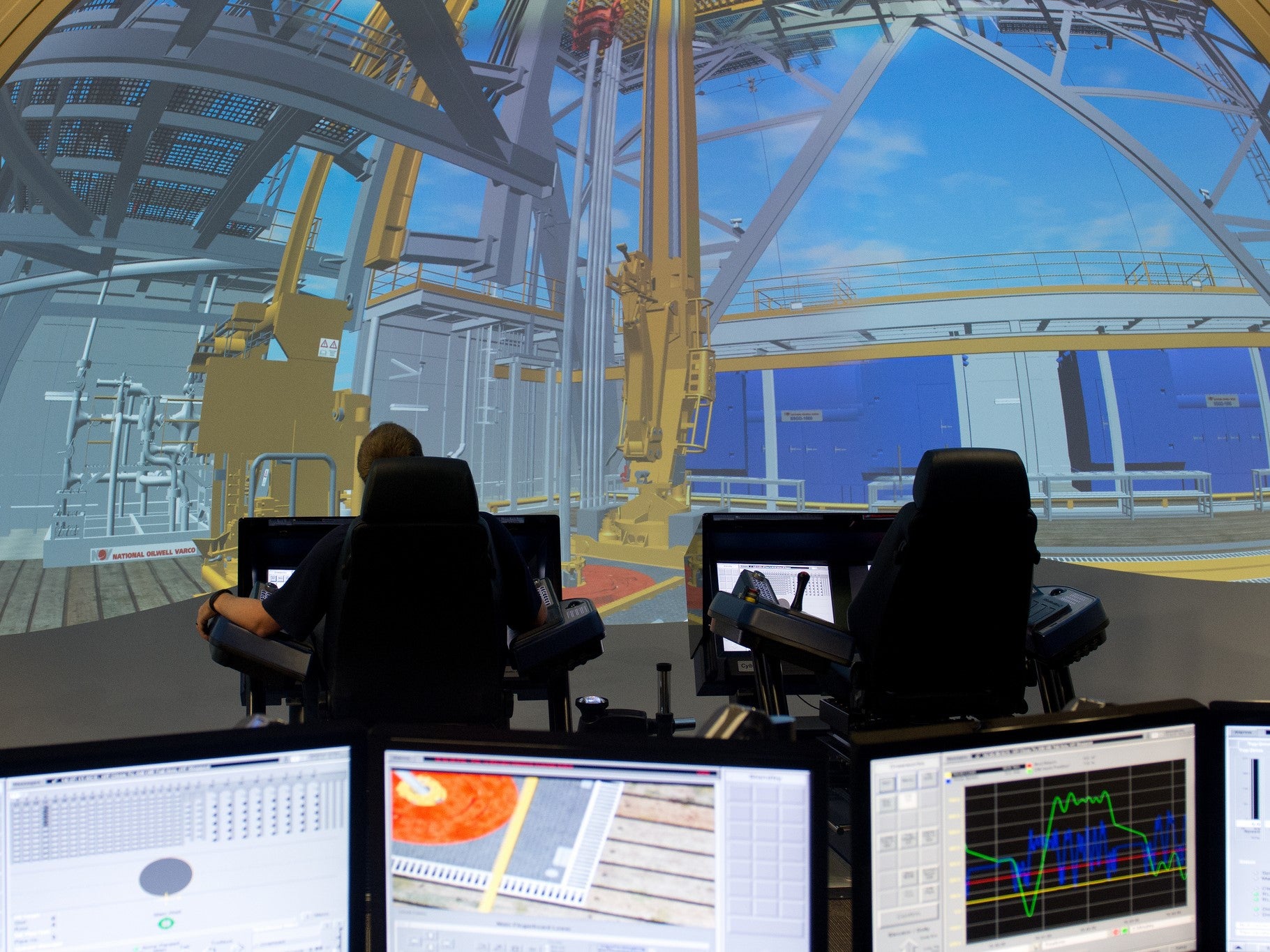
Mechanics, Uncertainty and Simulation in Engineering at Texas CAEE advances the fundamental understanding of how materials and systems behave under real-world conditions. By combining computational modeling, data science and experimental methods, our researchers develop tools to predict performance and quantify uncertainty, while designing safer, more efficient and more reliable engineering systems.
This research area focuses on select problems, often multidisciplinary in nature, whose solution requires the synergy of applied mechanics, applied mathematics, reliability and stochastic analysis, computational simulation and/or physical experiments. Our graduates are employed by engineering consulting and design firms, engineering companies offering specialized and high-value services, the offshore oil and gas industry and academic institutions worldwide.
Our work is driven by the need to understand physical processes, and a desire to provide engineering solutions to problems affecting infrastructure and the built environment. Our areas of expertise cover topics including:
- Acoustics
- Collapse modeling
- Computational mechanics
- Coupled physics problems
- Earthquake engineering
- Inverse problems and imaging
- Reliability and risk assessment of components and systems
- Simulation of structural response to blast and impact loads
- Soil-structure interaction
- Stability of structures
- Structural dynamics
- Wave propagation
- Wind engineering
Resources
- Research Area Coordinator: Loukas Kallivokas
- Administrative contact: Leslie McCroddan
Research Facilities & Groups
- MUSE lab (ECJ 4.602)
- MUSE too lab (ECJ 3.301)
- Computational Mechanics of Soft Materials Lab (CMSML)